Give your Desktop a Mozaic Touch

Experience the Windows 8 Metro Stlye UI on your Computer

Windows 7 God Mode

Get an Advanced Control Panel in Windows7 by enabling God Mode

Download Internet Explorer 9

Enjoy The Internet in a New and Secure Way

Microsoft Office 2010 Professional Activation

Activator for Microsoft Office 2010 Professional 100% Working..!!

Flash Wallpapers for Mobile

More than 175 Flash/SWF wallpapers for Mobile with System Info

Showing posts with label Security speak. Show all posts

Friday, March 30, 2012

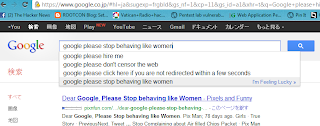
Japan orders Google to remove auto-complete function over privacy complaint

Japan+orders+Google+to+remove+auto-complete+function+over+privacy+complaint
          Google has been ordered to disable part of its autocomplete function in Japan after complaints it violates privacy. According to a report by The Japan Times, the court was acting on a petition accusing Google’s autocomplete feature of being defamatory.

          The petition was filed by a Japanese man (name not disclosed) who alleged that some of the autocomplete suggestions accompanying his name were not only defamatory but also breached his privacy. The unnamed petitioner, in fact, claimed that these defamatory search suggestions even cost him his job. The man came to this conclusion after discovering that when people type his name into Google's search engine, words suggesting criminal acts, which he is unfamiliar with, automatically appear. If a computer-suggested term is selected, more than 10,000 items defaming or disparaging him show up in a list, Tomita said.

          Google has so far not carried out the court's request - but said it was "reviewing the order". "A Japanese court issued a provisional order requesting Google to delete specific terms from autocomplete," the Google spokesperson said in a statement. "The judge did not require Google to completely suspend the autocomplete function."

           Google defended the system, arguing that as results were generated mechanically - rather than by an individual it was not an invasion of privacy." These searches are produced by a number of factors including the popularity of search terms," the company said.

          Google has been having a few problems with these sorts of cases. Last year when a British man was falsely accused of being a paedophile in a Google Places review the company had to pull it. The search engine also had to give in to an Indian law directing internet companies to block religiously offensive information from searches.

Thursday, March 22, 2012

Mystery of Duqu Programming Language Solved

       An appeal for help from the programming community has allowed antivirus analysts to classify the unknown language used to develop key components of the Duqu Trojan. The sections responsible for downloading and executing additional modules in the Duqu Trojan, referred to by some as Stuxnet 2.0, were written in standard C++.
 
          Kaspersky Lab experts now say with a high degree of certainty that the Duqu framework was written using a custom object-oriented extension to C, generally called “OO C” and compiled with Microsoft Visual Studio Compiler 2008 (MSVC 2008) with special options for optimizing code size and inline expansion.

       Kaspersky’s Igor Soumenkov wrote, “No matter which of these two variants is true, the implications are impressive. The Payload DLL contains 95 Kbytes of event-driven code written with OO C, a language that has no automatic memory management or safe pointers,”.

Kaspersky’s analysis now concludes:
  • The Duqu Framework consists of “C” code compiled with MSVC 2008 using the special options “/O1″ and “/Ob1″
  • The code was most likely written with a custom extension to C, generally called “OO C”
  • The event-driven architecture was developed as a part of the Duqu Framework or its OO C extension
  • The C&C code could have been reused from an already existing software project and integrated into the Duqu Trojan
      The Duqu Framework may have been created by a different programming team, since it is unique to Duqu, unlike many parts of Duqu that seem to be directly borrowed from Stuxnet. It’s believed that the developers are old school that don’t trust C++ and that’s probably why they relied on C. Another reason for using OO C is because back in the good old days it was more portable than C++. 

           Knowing the techniques used to develop the malware allows Kaspersky's researchers to make better guesses about who might be behind the code. Creating Duqu was a major project, so it’s possible that an entirely different team was responsible for creating the Duqu Framework, while others worked on creating drivers and system infection exploits. In this scenario it's even possible that those who created the Duqu framework were ignorant of the real purpose of their work.

          Duqu was first detected in September 2011, but Kaspersky Lab believes it has seen the first pieces of Duqu-related malware dating back to August 2007. The Russian security firm also notes Duqu, like Stuxnet before it, is highly targeted and related to Iran’s nuclear program.

The Pirate Bay plans Low Orbit Server Drones to beat Censorship

The+Pirate+Bay+plans+Low+Orbit+Server+Drones+to+beat+Censorship
          One of the world’s largest BitTorrent sites “The Pirate Bay” is going to put servers on GPS-controlled aircraft drones in order to evade authorities who are looking to shut the site down. In a Sunday blog post, The Pirate Bay announced new “Low Orbit Server Stations” that will house the site’s servers and files on unmanned, GPS-controlled, aircraft drones.

TPB said:
          With the development of GPS controlled drones, far-reaching cheap radio equipment and tiny new computers like the Raspberry Pi, we’re going to experiment with sending out some small drones that will float some kilometers up in the air. This way our machines will have to be shut down with aeroplanes in order to shut down the system. A real act of war.
 
          We’re just starting so we haven’t figured everything out yet. But we can’t limit ourselves to hosting things just on land anymore. These Low Orbit Server Stations (LOSS) are just the first attempt. With modern radio transmitters we can get over 100Mbps per node up to 50km away. For the proxy system we’re building, that’s more than enough. Low earth orbit is 100 miles up and requires a launch vehicle capable of achieving speeds of 17,000 miles an hour. At “some kilometers up in the air,” these drones would require significant power to stay afloat, and that’s even before the power required to transmit megabits per second over a wireless connection. The LOSS are already in development, writes the blog from TPB. 
 
          As you might wish to solve the energy problem, you have not thought about it well. And that will probably be the weak point. In the air it is hardly the drones now at least can fill up with energy. You will need to load them somewhere where they will be charged. By then, the authorities can access and turn off the drones easily

Friday, December 16, 2011

Google and EFF propose improvements to HTTPS as GlobalSign releases CA breach report


          Certificate authority GlobalSign, who was implicated as having suffered a security breach by the infamous "ComodoHacker", have released their final report on the incident.

**APPLAUSE**
          Not only is the report thorough and convincing, but it appears that GlobalSign took every action, exactly as they should have, both during and after the incident. The report's conclusion? At no time was any of their certificate signing infrastructure compromised by an attacker. A peripheral web server that was not a part of their signing infrastructure was hacked into and it potentially put their own SSL certificate at risk, which they immediately revoked.

          As soon as there was a credible threat they shut down signing operations. Then, in parallel with their investigation into whether the compromise was more involved than just the web server, they proceeded to strengthen their existing controls to be sure a future attack would fail as well. What is this you say? Chester is saying nice things about a certificate authority? Yes, within reason.

          If all certificate authorities cared about the integrity of the system the way GlobalSign has, we would have a lot less to worry about when using SSL/TLS. The problem isn't with GlobalSign, the problem is that we expect the other 600+ signing authorities to behave in a similar manner. Time and again it has been proven that they don't, which leads me to some related initiatives from Google and the Electronic Frontier Foundation (EFF).

          If I were a certificate authority facing the angry security mob demanding they be made redundant, I would be getting behind one of these alternative proposals that still sees value in their participation.
Unlike Moxie Marlinspike (and to a degree, me), Google and the EFF think the existing system can be fixed, but it is in need of some fundamental changes.

          EFF logoThe EFF's proposal is called Sovereign Keys and builds upon the existing security imparted through the use of Public Key Infrastructure (PKI).  Web surfers would not be forced to trust every certificate authority absolutely, but rather could check with multiple mirrors that possess an append-only log of valid, signed keys/certificates. These "sovereign keys" could be obtained through DNSSEC or from traditional certificate authorities.

          Audit proofs could be issued by supporting web servers without breaking existing client implementations. It's great to finally see some sensible proposals and so many great minds working on this vexing problem. It may not be easy to fix, but the future of security and privacy on the internet depend on it.

Thursday, December 15, 2011

IT staff have better access to sensitive data than CEOs: survey

          Fears over lost encryption keys are holding back adoption of the tech.

          Do you really know who has access to your sensitive company data? A new survey from Venafi suggests that many workers believe it is the IT department that can most easily access a company's most valuable information, ahead of C-level executives.

          The survey of over 500 IT professionals found that 65% believe it is the IT department that has the easiest access, way ahead of the CEO on 30%. Management (8%), HR (7%) and legal (5%) were also on the list. The survey also shone a light on just how reliant some companies are on a small number of people to access their all-important data. If the person in charge of managing an organisation's encryption keys were to leave, 23% said they would worry about whether they would be able to access and decrypt the data.

           This follows on from a previous Venafi survey which revealed that 40% of IT admins admitted they'd be able to hold a company to ransom by withholding or hiding encryption keys. 24% of respondents said they were holding back on using encryption technology because of fears over losing encryption keys.

          "Then they find out that when they deploy encryption they have another big problem and that is managing the encryption keys," Hudson added. "Encryption is only half the solution - you need to know where the keys are and they find that the only way to manage the keys is with an automated certificate and key management system. Once the data's protected with encryption, the key becomes the data and the thing that must be managed and protected."

Privileged users causing data security headache

          Many will access sensitive data simply to satisfy their curiosity, Ponemon research finds. Businesses are leaving themselves open to the risk of data breaches by failing to adequately control privileged users, according to a report from HP and the Ponemon Institute.

          The survey spoke to more than 5,000 IT operations and security managers across 13 countries and found that 52% are at least "likely" to be provided with access privileges beyond those that their job requires.
Of those workers that are trusted with privileged access rights, 64% claim they will access confidential data simply out of curiosity, while 68% believe they are "empowered" to access all the sensitive data they want.
According to HP "general business data" is most at risk of snooping, along with customer data, while mobile, social media and business unit specific applications were most targeted.

          What really stands out from these results is the lack of control many organisations appear to have over user access rights. Just under one-third of respondents believe that access governance policies are in-place and are strictly enforced at their organisation. Just 15% of companies admitted they could be confident that they are able to determine if a user is complaint with policies.

          Many respondents said that the inability to keep up with change requests from users, inconsistent approval processes, high costs of monitoring and difficulty in validating access changes were creating a barrier to enforcing privileged user access rights. "The results clearly emphasise the need for better access policy management, as well as advanced security intelligence solutions, such as identity and privileged user context, to improve core security monitoring."

Google cleans up malicious Android Market apps

          Hidden ToS in legitimate-looking apps tricked users into signing up for expensive text messaging services. Google has removed 22 malicious apps from its Android Market that were tricking users into signing up for expensive text messaging services.

          The apps were discovered by Lookout Mobile Security, who claimed that the malicious apps first appeared as horoscope apps. They contained what Lookout called "fairly hidden" terms of service (ToS), and a single "Continue" button, which was taken as confirmation that the user had agreed to the ToS. Users were then signed up to expensive text message services, which the BBC claimed could cost up to £3 per message sent and received. The malicious apps were part of the RuFraud scam, Lookout said.

          A second wave of malicious applications then appeared, which were disguised to look like more popular, legitimate apps, such as Angry Birds and wallpaper apps. The attacks have affected users across Europe, Lookout said. Sophos' Vanja Svajcer said Google should have reacted quicker to what is become a big problem for Android devices.

          "Misusing premium SMS services is the most common model for malicious mobile malware. When a malicious app is installed, it starts sending or receiving messages, which makes the installation very expensive for the user. The damage is often seen only when it is too late, once a monthly bill is received," he wrote.
"Google's reaction has been quick, but not quick enough - at least ten thousand users downloaded one of the malicious apps from the list," he added. "We have already stated several times that the requirements for becoming an Android developer that can publish apps to the Android market are far too relaxed. The cost of becoming a developer and being banned by Google is much lower than the money that can be earned by publishing malicious apps."

          Unlike Apple's App Store, entries to the Android Market are not vetted before they go live, meaning users must be much more aware of what they are downloading and ensure they read the ToS fully. Lookout Mobile Security recently said malware aimed at Android devices is on the rise, and that cybercriminals may have stolen more than $1m from Android users via these text messaging scams.

Wednesday, December 7, 2011

XXX porn web domain names now up for grabs

           The controversy-hounded pornography domain names ending in .xxx are now up for general sale, with 100,000 having already been snatched up in a previous, restricted sale, according to the BBC.  According to reports published Friday, a group of large porn website operators has sued ICANN and the ICM registry - the company that's launching and profiting off the .xxx domain—on anti-monopoly grounds. ICANN, a non-profit, oversees management of the top-level domain name space.

          The suit, brought by players including YouPorn, PornHub, Brazzers, Xtube, Playboy.com, and Digital Playground, was filed in the US District Court of California on Nov. 16. At this point, appending dot-xxx to a domain is optional. But many, including human rights groups, fear that the domain will be used to corral adult entertainment into a red-light district - particularly countries with less-than-relaxed attitudes toward porn.

          The problems with .xxx are manifold. Beyond issues of profiteering from a new domain whose necessity is questionable, issues of free speech loom large. Carter in PlayboyBack in 2004, when this porn-regulation domain campaign began, CNET's Declan McCullagh nicely summed up the free-speech issues:
As soon as .xxx launches, conservatives in Congress will begin to clamor for laws to make the domain mandatory for sex-related Web sites. That may not be a big deal for hard-core pornmeisters who prefer that virtual street address, but what about sex education sites that include explicit graphics and don't wish to be blocked by filtering software? And where should Salon.com - which features images of topless women - or Playboy.com - which publishes important interviews with U.S. presidents - end up?

          As far as profiteering goes, we're already seeing colleges that have secured their .xxx domain names just to avoid the horror show of reputation-wrecking versions of their schools' sites popping up in search results. ZDNet's Violet Blue deems the .xxx business plan, if that's what it is, "brilliant—if evil." Her further musing:
Just think of how much would be made if someone could bluster ICANN into approving .PEDO.

          Back in June, McAfee secured the rights to perform free daily security scans on every website at a .xxx address. SiteAdvisorAccording to The Register, that $8 million deal secured the ability for porn surfers to install a version of McAfee's free SiteAdvisor plug-in, which will attempt to verify the security of a .xxx site before the user decides to visit, make a purchase or grab a download.

          Porn webmasters are also getting a McAfee SECURE "trust mark" for their shopping carts that McAfee claims can improve conversions.
All well and good. Or is it?

          BEAST, short for Browser Exploit Against SSL/TLS, is a piece of JavaScript that works with a network sniffer to decrypt encrypted cookies used by a targeted website to grant access to restricted user accounts.
Beyond SSL being broken, security products can't necessarily be trusted to filter out porn. Just today, The Telegraph reported that the "HomeSafe" security product provided by Britain's third-largest broadband provider as a way of blocking porn and malware for over a week has failed to restrict access to Pornhub.

Symantec says spam levels fall to lowest in three years

          Spammers may have more success hitting social media websites rather than through email blasts. Global spam fell to the lowest level in three years in a sign that spammers may be getting a better rate of return by hitting social-media websites instead, according to the latest figures on Tuesday from Symantec.

          About 70.5 percent of all email was spam, a still-high figure but one that is much lower than a few years ago, when it was well over 90 percent. Symantec calculated the percentage by analyzing some 8 billion messages it processed a day last month, according to the company's latest MessageLabs Intelligence Report.
Spam volumes dipped in March after Microsoft, law enforcement and other companies joined forces to take down Rustock, a large botnet responsible for sending up to 30 billion spam messages per day.
          "Ever since then, nothing really filled the void," said Andy Watson, a senior software engineer at Symantec. Botnets increasingly have come under law enforcement scrutiny. Other botnets including Coreflood and Kelihos were taken down this year, and two major ones, Waledac and Bredolab, were dismantled in 2010. A large affiliate spamming network called Spamit also shut down last year.
Watson said spammers may be putting more effort into social media sites because there is a better return. Spam links on services such as Twitter and Facebook can spread through users clicking on the links, Watson said.
          Social-media spammers are continuing to set up their own URL shortening services, often with open-source software. By using a URL shortener, a user is less likely to see that the link may lead to a questionable website. Watson said the current largest spamming botnet is "Grum," which is sending about 25 percent of the world's spam. Grum has been on the scene for a while now and Symantec ranked it as the second-most active botnet last year, comprising up to 470,000 infected computers.
          The U.S. is the biggest source of spam, sending 28 percent of the total number of messages, followed by India at 9 percent; Russia, 5.7 percent; Brazil, 4.3 percent and China at 4 percent, Symantec said. The most popular topics for spam messages are hawking pharmaceuticals, watches and jewelry, unsolicited newsletters and adult-related content.

India urges social media sites to censor offensive content

          Indian minister Kapil Sibal made the request to officials of Facebook, Google, YouTube and Yahoo. India has asked social networking sites Facebook and Google and other internet companies to screen user content and remove any offensive material.

          Indian information and telecommunications minister Kapil Sibal made the request to officials of Facebook, Google, YouTube and Yahoo who he met on Monday. Sibal told the reporters in New Delhi that his aim was that insulting material never gets uploaded. "We will evolve guidelines and mechanisms to deal with the issue," Sibal said.

          Saying that the government supported free speech and was against censorship, he added that some material on the Internet was so offensive that no one would find it acceptable. "Three months back we saw that Google, Yahoo!, Facebook had images which could be an insult to Indians, especially religious-minded people," Sibal added. Facebook is reported to have said that they would continue to engage the Indian authorities as they debate this important issue.

Tuesday, December 6, 2011

Protecting Your BlackBerry Smartphone with Security Wipe

          The BlackBerry device is a wonderful thing. We load our BlackBerries with various softwares and applications to increase our productivity and customize them with interesting themes and ringtones. We watch movies and play games and track day to day activities. All of these things require passwords and usually involve storing data on our devices that is sensitive in nature.

          So what if you want to wipe your BlackBerry clean?

          There are a number of reasons why you might want to wipe out your Blackberry. Perhaps you have switched jobs and need to submit your BlackBerry into your new IT department so they can set it up for their network. You wouldn’t want them to have access to your previous employers data would you?

          Perhaps you have purchased a new model of BlackBerry and would like to gift your previous model to a friend or sell it on ebay. The same rule applies, you do not want them to see what you were using your Blackberry for prior to handing it over.

How to Use security wipe ?
          Before using this function, it is recommended that you back up any data and applications that you like to use on your new BlackBerry smartphone.
  • On the BlackBerry smartphone, select Options from the home screen.
  • Select Security Settings, then Security Wipe.
  • Specify what items will be wiped during this process by checking off the boxes.
  • Enter “blackberry” (field is not case-sensitive) and select Wipe.
  • The BlackBerry smartphone will reset a few times, and after this process is complete, it will no longer contain any of your personal data.

Friday, December 2, 2011

McAfee drafted Five Steps to Avoiding bad apps on Pc & Mobile

          Malicious applications are one of the most serious threats to smartphone users today. Not only can a dangerous app infect your phone and steal your personal information, it can even spy on you. Read our five easy tips for avoiding bad apps, and keep your device and information safe.

          An Android developer recently discovered a clandestine application called Carrier IQ built into most smartphones that doesn't just track your location; it secretly records your keystrokes, and there's nothing you can do about it. In this digital age, privacy is more important than ever. Just because you “don’t have anything to hide,” does not mean that you shouldn’t value your privacy or fight for it when companies do things like this, especially with something as personal as your cell phone.

          McAfee has come up with five “Common sense” practices that you might not have thought about before, but they actually do make sense for the most part.
 
Here’s a look:
  • For the moment, the amount of detected smartphone malware is relatively low compared to malware that targets desktop or laptop PCs; but being aware that it exists is the first step toward protecting yourself and your data.
  • Research apps and their publishers thoroughly and check the ratings - better to install apps that are broadly used in the market and/or are recommended by your circle of friends and colleagues
  • It is wise to purchase from a well-known reputable app store market, such as the Android Market. One way for Android users to avoid installation of non-market applications is to de-select the “Unknown sources” option in the Applications Settings menu on their device. If the option is not listed, it means your mobile service provider has already done this for the user.
  • When you install an app, you’ll see a list of permissions for services that are granted access to the hardware and software components on your device, like contacts, camera and location. If something in the permissions screen doesn’t look right, don’t install that app! For example, a game or alarm clock app probably shouldn’t need to access your contacts or have the ability to transmit that data from your device.
  • Install antivirus software on your phone. It is a good idea to install an antivirus program when you get a new mobile device before you add any other apps.
         This last one actually be the most crucial one that people are missing. McAfee argues now that because smartphone and tablet sales are eclipsing those of desktops and laptops, cyber crime is surging in the mobile sector.

Thursday, December 1, 2011

Organisations lack confidence ability to effectively manage encryption keys: Symantec

Average loss from encryption-related issues is $1,24,965 per year.


          Security vendor Symantec released the findings of its 2011 Enterprise Encryption Trends Survey, which found enterprises are securing data with encryption in more places than ever.
On the flip side, the survey discovered that encryption solutions are fragmented, risk-ridden for organisations from the lack of centralised control of access to sensitive information and disrupting critical processes such as e-discovery and compliance monitoring. The survey found that the inability to access important business information due to fragmented encryption solutions and poor key management is costing each organization an average of $1,24,965 per year.

          Symantec director product management Joe Gow said while many organisations understand the importance of encrypting their data, issues with key management and multiple point products can give them inconsistent visibility into what has been protected. He added, "As the Enterprise Encryption Trends survey demonstrates, encryption needs to evolve from a fragmented protection historically implemented at the line of business level to a capability that is managed as a core component of organizations' IT security operations."
The survey found that 48% of enterprises increased their use of encryption over the past two years. A third of the respondents said unapproved encryption deployment is happening on a somewhat to extremely frequent basis.

          It was also found that organisations are not very confident in their ability to effectively manage encryption keys. All of the organisations, which reported encryption key issues, incurred some sort of related costs, such as compliance requests (48 percent), inability to respond to eDiscovery requests (42 percent), and inability to access important business information (41 percent).

Wednesday, November 30, 2011

Cyber threats appearing where even savvy users don’t expect

          An EC cyber security expert believes cyber attackers are getting more sophisticated, in ways that even savvy web users may not expect.


          Doctor Stephan Lechner, director general of the Institute for the Protection and Security of the Citizen, Joint Research Centre, European Commission, in a lecture to the Cyber Security Summit says that he believes Cybersecurity has finally 'gone political'. By that he means the problem has enough understanding in the mainstream for it to become political capital.

          This is a good thing as Cyber security systems around the world will be getting more attention, both in the public and private sector, but it also means that cyber criminals have had to become more devious to deliver their cyber-payloads. One of the examples he believes is becoming more widespread is the 'no-use app', basically something that is downloaded from an app store - it doesn't appear to do anything and the customer simply deletes it and moves on - without even realising it has just dropped its payload. Too many consumers assume that smartphones are immune to viruses, he says.

          He compares the drivers of malware, viruses and cyber threats as following Moore's law - every 18 months the threats double. The newest threat he has picked up on has come through loopholes in finger print readers and even smartphone barcode readers have lead visitors into trouble. The biggest problem is education. Dr Lechner believes that online safety should be taught at the sometime as computer literacy itself - even if that means teaching 5 year olds about cyber safety.

          "The five year olds in the classrooms now, are your future 14 year old hackers. It should be mandatory for children to learn cyber security as they learn how to use ICT," he said. He even goes so far as to believe that technology teachers need to be kept up to speed in this space as well, as often students are more tech savvy than their teachers.

          He also believes that web savvy consumers have become too confident for their own good, often clicking 'OK' in pop up boxes that may look like part of the operating system without even thinking. Ironically, as technology gets more simplified on the surface (and more complicated in the back end), security awareness amongst users falls.

Tuesday, November 22, 2011

Security Flaws in Android 4.0 (ICS)


          Facial reorganization to unlock can easily be bypassed with simple photo trick in Android 4.0 (Ice Cream Sandwich). Recently a blogger named "soyacincau" demonstrated about he vulnerability and showed how easily any one can bypass the facial reorganization. He took a photo of himself using another phone and held it up to the front facing camera on the Samsung Galaxy Nexus, the first smartphone to run Android 4.0, which was then unlocked. In ocotober a developer of CyanogenMod also concluded the same thing. 

          Later A Google spokesperson told that the feature is considered to be experimental and offers little security. According to the news site, the user interface for the Face Unlock feature also warns users that it is less secure than using a pattern, PIN or password, even going as far as saying "Someone who looks similar to you could unlock your phone". It is unclear if Google will add "Or a photograph of you" to the warning.

Monday, November 21, 2011

62% of children faced negative experiences online: Norton Report

         The report surveyed 19,636 online users. The latest edition of the Norton Online Family Report from Symantec reveals some hitherto secret aspects of children's behaviour online. Conducted between February and March 2011 by StrategyOne, it surveyed 19,636 online users of whom 12,704 were adults, 4,553 children aged 8-17 and 2,379 teachers of students aged 8-17.

          Around 62% of kids across the world said they faced a negative experience while online, with reporting a serious negative experience, such as receiving inappropriate pictures from strangers, being bullied or becoming a victim of cybercrime.

          This year's report also identifies the new issue of "cyberbaiting," a phenomenon where kids badmouth their teachers and then capture on their cell phones their distressed reactions. It also shows a high number of kids shopping online with their parents' credit cards.

          Petten, a youthologist and author of "Radical Parenting, said, "Kids are developing their online identity at an earlier age than ever before and they need parents, teachers and other role models to help them figure out where to go, what to say, how to act and perhaps most importantly, how not to act."

Thursday, November 17, 2011

US issues warning to perpetrators of cyber attacks

          Pentagon says US cyber attackers “would be taking a grave risk” The US has said that it would retaliate with military force, if necessary, against a cyber attack. The Pentagon stated this in a 12-page report made public on Tuesday. The report added, "When warranted, we will respond to hostile attacks in cyberspace as we would to any other threat to our country."

          It adds, "We reserve the right to use all necessary means - diplomatic, informational, military and economic - to defend our nation, our allies, our partners and our interests." According to the report, hostile acts could include "significant cyber attacks directed against the US economy, government or military" The Pentagon states that perpetrators of cyber attack against the US "would be taking a grave risk."

          If a defense-based deterrence fails to stop a hostile act, the Pentagon "maintains, and is further developing, the ability to respond militarily in cyberspace and in other domains." The latest report also categorically reiterated that the US will "exhaust all options prior to using force whenever we can" when responding to a hostile act in cyberspace. In May, the White House's international cyberstrategy declared that the United States reserves the right to use all necessary means - diplomatic, informational, military and economic - to defend the nation against hostile acts in cyberspace.

          Attacks on US computer networks have reportedly become more frequent and were costing US companies an estimated $1 trillion in lost intellectual property, competitiveness and damage.

Tuesday, November 15, 2011

Duqu computer virus Detected by Iran civil defense organization

          The virus is called W32.Duqu, or just Duqu create fear after the opening Pandora’s Box of Stuxnet. The head of Iran's civil defense organization told the official IRNA news agency that computers at all main sites at risk were being checked and that Iran had developed software to combat the virus.

          First, Duqu is not deigned to harm industrial automation. The software basically attacks windows systems. Instead of sabotaging industrial control, Duqu has been general remote access capabilities. Duqu has a key logger and can save passwords etc.. The malware uses HTTP and HTTPS to communicate to a command and control (C&C) server at 206.183.111.97, which was hosted in India, the IP is inactive as of October 18th. Duqu infiltrates systems directly it is not a worm like Stuxnet and needs to be placed directly, e.g. through infected mails.
"We are in the initial phase of fighting the Duqu virus. The final report which says which organizations the virus has spread to and what its impacts are has not been completed yet. All the organizations and centers that could be susceptible to being contaminated are being controlled.

So far Duqu was found on less than 10 computers from European companies, which are developing industrial control software, according to a Symantec-Analyst. The software is programmed to remove itself automatically after 36 days. The complete set up: Invades target (not wormlike), spies out passwords, and removes itself – hopefully without being detected – seems like Duqu actually prepares an attack. This is also assumed by F-secure, “it’s possible we'll eventually see a new attack targeting PLC systems, based on the information gathered by Duqu.”

South Korea launches initiative to block spam

          It requires ISPs to block the default SMTP port, Port 25. The South Korean authorities are asking all its internet service providers (ISPs) to block all e-mail sent from anything but "official" e-mail servers in a bid to block spam.

         The plan rolled out for this initiative is known as "Block 25". As per this, an ISP blocks the default Simple Mail Transport Protocol (SMTP) port, Port 25, from sending e-mail messages, which will force the users to use their ISP's mail servers. This, it is hoped, would stop spam. To be enforced next month, the analysts are not sure if this plan would effectively do that as they feel that spammers could use alternate ports.
James Blessing, a council member of the UK's Internet Service Providers' Association, says, "Many corporate mail servers run authenticated access through port 25."

          He added, "If you want to connect to that you won't be able to if you block port 25. You'll stop people working from home."

W3C plans privacy tools to warn users of unauthorised tracking

          W3C to help users control how their personal data is managed. Internet users will start receiving warnings if websites do not respect their privacy, thanks to new tools being developed by the World Wide Web Consortium (W3C), the organisations responsible for setting standards on the web.

          W3C in its first draft for the new set of standards has published two documents, the Tracking Preference Expression and the Tracking Compliance and Scope Specification, in a bid to help users control how their personal data is managed. Matthias Schunter from IBM who chairs the W3C group, said, "Users have the feeling they are being tracked and some users have privacy concerns and would like to solve them."
Schunter added that the biggest problem in the current scenario is that different browser makers currently employ incompatible privacy settings.

          The W3C group is trying to strike the balance between protecting users' privacy and providing them with personalised online experiences.